How Media Literacy Changed the Way I See the Culture War
There is something uncomfortable about admitting you were wrong.
It is much easier to tell a story in which we were always the informed ones. We saw through the propaganda. We recognized the manipulation. Other people were gullible, but we knew better.
That isn’t my story.
I have fallen for political framing.
And realizing that may have taught me more about media literacy than any textbook ever could.
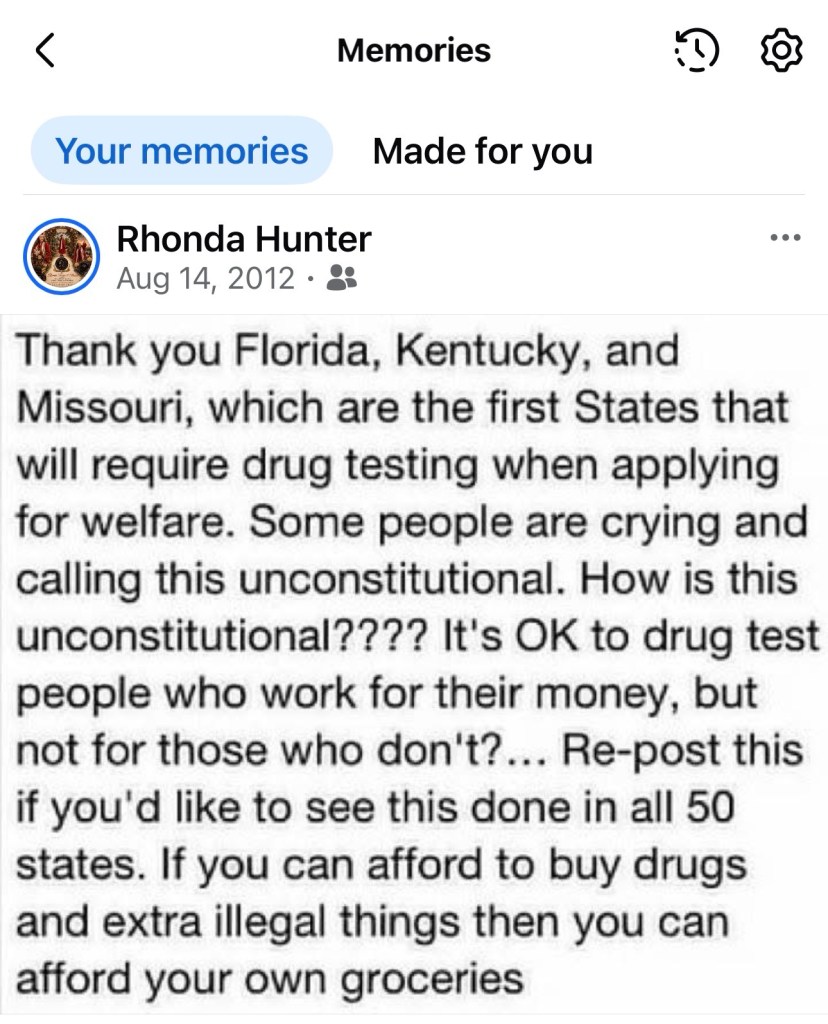
Years ago, I shared one of those memes that circulated constantly on social media: if people receive government assistance, they should have to pass a drug test.
At the time, it sounded perfectly reasonable to me.
If taxpayers are helping you, why should taxpayers subsidize a drug habit?
Simple.
Except eventually I started asking questions that the meme never asked me to consider.
Why had I automatically associated someone receiving public assistance with drug use?
How widespread was the problem?
Would mandatory testing actually save taxpayers money after accounting for the cost of administering it?
What happens to a family when a parent tests positive?
What happens to the children?
Most importantly, where had the image in my head of the irresponsible, drug-using welfare recipient come from?
I realized I had been given a stereotype before I had been given evidence.
My opinion changed.
That experience should have taught me something immediately about political messaging.
It didn’t.
It took another culture-war issue before I really began understanding what was happening.
When the Culture War Worked on Me
I didn’t always follow politics closely.
I voted. I had opinions. I paid attention to major events. But I wasn’t spending my time reading legislation, checking government databases, comparing headlines with primary sources or asking who funded a particular message.
Then I started hearing something over and over again.
Transgender people were replacing women.
Women were being erased.
Women’s spaces were being invaded.
The word “woman” was disappearing.
And I’m going to admit something that people don’t always like admitting:
It got to me.
I’m a woman.
I’m a mother.
I’ve given birth. I’ve raised children. I’ve worked. I’ve taken care of a family and a home. I’ve lived more than five decades experiencing the world as a woman.
So when someone repeatedly tells you that something fundamental to your identity is being taken away, eventually an emotional response kicks in.
What do you mean I’m being erased?
What do you mean women are becoming obsolete?
What are they taking away from us?
Notice what had already happened.
Before I had established that something was actually being taken from me, I felt threatened by its loss.
That’s powerful messaging.
Then eventually I stopped reacting long enough to ask an embarrassingly simple question:
How, exactly, can another person’s existence erase me?
I’m still here.
I’m still a woman.
My identity didn’t disappear.
My experiences didn’t disappear.
My history didn’t disappear.
My family didn’t disappear.
My accomplishments didn’t disappear.
Someone else’s inclusion did not require my exclusion.
If terminology on a form becomes more inclusive, I don’t suddenly cease being a mother.
If another person identifies as a woman, I don’t become less of one.
Nothing has actually been removed from me.
And once I started thinking about it that way, the entire framing began falling apart.
Then I Remembered Erin Brockovich
Recently, another piece clicked into place from somewhere I wasn’t expecting.
I thought about the movie Erin Brockovich.
There is a scene involving a woman whose health has been devastated after living in the area affected by contaminated groundwater. She has undergone a hysterectomy and is dealing with breast cancer. She talks about feeling as though losing parts of her body traditionally associated with femininity has made her less of a woman.
Erin reassures her, in that wonderfully blunt way the character does, that those things don’t determine her value as a woman.
And suddenly I thought:
There it is.
What actually makes someone a woman?
If a woman has a hysterectomy, is she less of a woman?
If she undergoes a mastectomy, is she less of a woman?
If she cannot have children?
If she chooses never to have children?
If she has gone through menopause?
If she never breastfeeds?
Of course not.
We would never tell a woman recovering from cancer that losing her breasts diminished her womanhood.
We wouldn’t tell a woman struggling with infertility that her inability to give birth makes her less female.
So why had I allowed political messaging to convince me that recognizing another person’s identity could somehow diminish mine?
My womanhood isn’t dependent upon somebody else’s exclusion.
And then I noticed something else.
We hear constantly about transgender women supposedly “erasing women.”
But transgender men exist too.
Where is the equivalent national panic about transgender men “erasing men”?
Where are the endless declarations that men are becoming obsolete?
Where are men being told that another person’s identity has somehow taken their masculinity away?
That discrepancy made me look even harder at the framing.
Why was female erasure such an effective political message?
Because it wasn’t merely talking about policy.
It was talking about identity, fear and loss.
Bathrooms, Sports and the Creation of Threat
Then came bathrooms.
The messaging often wasn’t simply that there should be rules governing public facilities.
It was much more emotionally charged.
Women were in danger.
Men were invading women’s bathrooms.
Girls needed protection.
But stop for a moment and visualize an ordinary women’s restroom.
People walk in.
They enter individual stalls.
They close the doors.
They use the bathroom.
They wash their hands.
They leave.
The political imagery surrounding transgender people in bathrooms frequently bears very little resemblance to the mundane reality of people using a restroom.
If someone assaults another person, spies on someone, exposes themselves, photographs someone without consent or engages in sexual misconduct, we already have a problem to address:
the behavior.
Being transgender itself isn’t evidence that someone intends to commit any of those acts.
Sports deserve serious policy discussions too. Biological differences can matter in athletic competition, particularly after puberty. Different sports, ages and levels of competition can present different questions.
Those are legitimate discussions.
But legitimate questions about competitive classifications can quickly become something else when politicians turn a relatively small population into evidence of a civilization-level crisis.
That is where I started asking another media-literacy question:
How large is the problem compared with the amount of political attention being devoted to it?
And then an even bigger question:
What Does Any of This Have to Do With My Grocery Bill?
That question changed everything for me.
What does fighting about someone’s gender do to lower the price of groceries?
What does it do about my healthcare premium?
My prescription costs?
Housing affordability?
Wages?
Jobs?
Education?
Infrastructure?
Utility bills?
Government fraud?
The state budget?
The federal deficit?
I started looking at politicians telling me whom I should fear and asking:
Okay. But what are you doing about the things government actually has enormous power to affect?
That’s when I realized how useful a culture war can be politically.
If I’m furious at my transgender neighbor, I might not be asking why my healthcare costs increased.
If I’m terrified that someone is “erasing women,” I might not be asking who voted for a particular tax bill.
If I’m convinced that another group of Americans represents an existential threat to my way of life, I might stop asking whether the politician promising to protect me has an economic plan at all.
Culture-war politics can transform a performance question into an identity question.
Instead of:
Did you make my life better?
the question becomes:
Are you on my side against them?
That’s an extraordinarily powerful substitution.
Because a politician doesn’t necessarily have to solve my problems if that politician can keep me afraid of someone else.
Give People an Enemy
Once I recognized that pattern, I started seeing it everywhere.
Find something people don’t completely understand.
Make it frightening.
Make it personal.
Tell them something important is being taken away.
Give them somebody to blame.
Then tell them which political team will protect them.
Immigrants are taking your jobs.
Transgender people are taking women’s identities.
Poor people are taking your tax dollars.
Someone else’s religion is destroying yours.
Someone else’s family is destroying your family.
Someone else’s rights are somehow reducing yours.
The specific target can change.
The mechanism remains remarkably familiar.
And that realization is what pushed me toward media literacy.
Not because I suddenly became immune to propaganda.
I’m not.
Neither are you.
None of us are.
Media Literacy Isn’t Knowing Everything
I think we sometimes misunderstand media literacy.
It isn’t memorizing every statistic.
It isn’t knowing every law.
It isn’t having a degree.
It isn’t watching the “correct” news channel.
And it certainly isn’t believing that everyone on the other political team is brainwashed while everyone on ours is enlightened.
Media literacy begins with learning to recognize when someone is pushing our emotional buttons.
Now, when something makes me immediately angry or frightened, I try to ask questions before sharing it.
What is the actual claim?
What is the original source?
Is the headline accurately describing the underlying information?
What context is missing?
How many people are actually affected?
What does the legislation actually say?
Who sponsored it?
Who voted for it?
Who voted against it?
What problem is this proposed policy supposed to solve?
How much will it cost?
Who pays?
What evidence suggests it will work?
And perhaps the most important question:
Who benefits from my anger?
Because somebody often does.
It’s Harder to Fear People You Actually Know
I also recognize that my personal relationships probably helped me question some of this messaging.
I have LGBTQ+ friends and family.
They’re not an abstract political category to me.
They’re people.
People I know.
People I care about.
People who work.
People who pay bills.
People who worry about money.
People who laugh, cry, fall in love, raise families, get irritated, buy groceries and complain about life’s everyday nonsense just like everyone else.
It’s considerably harder to transform a group into a frightening stereotype when someone from that group has sat at your table.
“The transgender agenda” can be made to sound terrifying because an abstraction can become whatever a political communicator needs it to become.
An actual human being is harder to manipulate into a monster.
And Then There’s Religion
This evolution in my thinking eventually brought me to another culture-war issue:
Religion in government.
Let me be clear.
I don’t care what religion you practice.
Christianity.
Judaism.
Islam.
Hinduism.
Buddhism.
Something else.
Nothing at all.
Believe deeply.
Worship freely.
Live according to your faith.
That freedom is one of the things this country is supposed to protect.
But religious freedom cannot mean that one person’s religious beliefs automatically become everybody else’s legal obligations.
Your Bible can govern your life.
It doesn’t automatically get to govern mine.
A Christian has the right to practice Christianity.
A Muslim has the right to practice Islam.
A Jewish person has the right to practice Judaism.
An atheist has the right to practice none of them.
Government represents all of us.
So when a politician proposes a law rooted in religious morality, I want something more than:
“My faith says this is wrong.”
You are entitled to that belief.
But if you’re going to use government power to regulate everybody else, give the public a governmental justification that can stand independently of your theology.
That’s part of living in a pluralistic society.
We Hired Government to Govern
This is ultimately where all of this brought me.
I’m tired of politicians telling me who I’m supposed to hate.
Tell me what you’re going to do.
Tell me about healthcare.
Tell me about housing.
Tell me about education.
Tell me about wages.
Tell me about jobs.
Tell me about infrastructure.
Tell me about government fraud.
Tell me about taxes.
Tell me about public safety.
Tell me about the economy.
And don’t just give me another campaign promise.
Tell me how.
How much?
Who pays?
What legislation?
What executive authority?
What timeline?
What happens if your plan doesn’t work?
How will we measure success?
That’s governing.
“Be afraid of those people” isn’t governing.
It’s marketing.
I Fell for It Too
Perhaps that’s the most important reason I’m writing this.
I’m not writing from a pedestal.
I’m writing as someone who remembers having that emotional reaction.
They’re erasing women.
And feeling something.
I’m writing as someone who once shared the meme about drug testing people receiving public assistance.
I’m writing as someone whose opinions have changed because I eventually stopped asking:
“Does this message confirm what I already believe?”
and started asking:
“Can this message prove what it just made me feel?”
There’s a huge difference.
I will undoubtedly get things wrong again.
I’ll probably believe something that turns out to be incomplete.
I’ll probably share something someday and discover that important context was missing.
That’s being human.
The goal of media literacy isn’t perfection.
The goal is developing enough intellectual humility to stop, investigate and change your mind when the evidence demands it.
Changing your mind after learning more isn’t weakness.
Admitting you were wrong isn’t weakness.
Sometimes growth begins with the uncomfortable realization that somebody successfully pushed your emotional buttons.
And sometimes the most important media-literacy question isn’t complicated at all.
It’s simply:
Wait. Why am I angry at these people in the first place?
And right behind it should come one more:
Who benefits from making sure I stay that way?