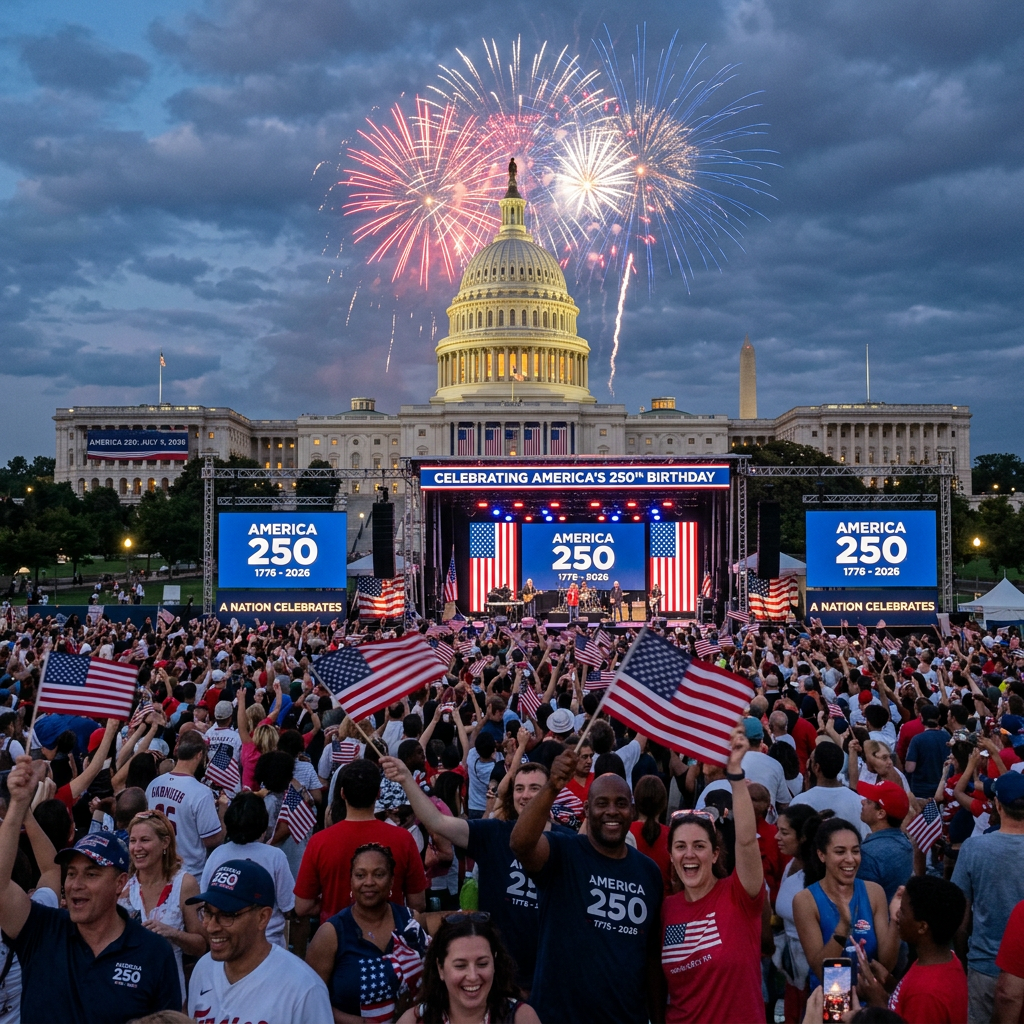
Over the past week, I’ve watched the conversation surrounding America250 spiral into something much bigger than a simple anniversary celebration.
On paper, the concept seems straightforward. America is approaching its 250th anniversary, and organizers want a series of events to commemorate the occasion. Most Americans, regardless of political affiliation, can agree that 250 years is historically significant and worthy of reflection.
Yet somehow the public conversation isn’t centered on American history.
Instead, we’re talking about artist cancellations, celebrity guest lists, lawsuits, UFC fights, political branding, and social media controversies.
That raises an important question:
If the goal was to celebrate America, why isn’t America the story?
The Difference Between Intent and Perception
One of the first lessons taught in communications and public relations is that intent and perception are not the same thing.
Organizers may genuinely intend for an event to be patriotic, unifying, and inclusive.
But audiences respond to what they perceive.
For many Americans, the most visible images associated with America250 have not been historical exhibits, educational programs, or discussions about the nation’s accomplishments and challenges.
Instead, the images dominating headlines have included:
- A UFC arena erected on White House grounds.
- Concert performers withdrawing from scheduled events.
- Celebrity invitation controversies.
- Lawsuits challenging aspects of the celebration.
- Political debates surrounding participation.
Whether fair or unfair, those images shape public perception.
Why Timing Matters
Part of the controversy stems from timing.
Most Americans associate the nation’s birthday with July 4, 1776.
That date carries symbolic weight because it represents the adoption of the Declaration of Independence.
However, one of the most publicized events connected to the celebration has taken place on June 14.
June 14 is significant for several reasons:
- Flag Day.
- The United States Army’s birthday.
- President Donald Trump’s birthday.
Supporters argue those dates provide sufficient historical justification.
Critics argue that combining a UFC event, the White House, and the president’s birthday creates a perception that the celebration is more centered on a political figure than on the nation itself.
Again, perception becomes the story.
When the Spectacle Becomes the Story
Historically, major anniversaries often focus on shared national identity.
Yet much of the media coverage surrounding America250 has focused on conflict.
Artists who declined participation became headlines.
States that withdrew became headlines.
Lawsuits became headlines.
Celebrity attendance became headlines.
The UFC became headlines.
At some point, the celebration itself stopped being the primary story.
The controversy surrounding the celebration became the story.
That is rarely what organizers hope to achieve.
A Public Relations Case Study
From a communications standpoint, America250 may become a fascinating case study for future students.
Not because of the celebration itself, but because it demonstrates how quickly messaging can become disconnected from audience perception.
Supporters often ask:
“Why are people opposed to celebrating America?”
Critics often ask:
“Why does this feel more political than patriotic?”
Those are not the same question.
When two sides are answering different questions, meaningful discussion becomes difficult.
The Bigger Question
Perhaps the most interesting question is not whether someone supports or opposes a particular event.
The more important question may be this:
What should a 250th anniversary celebration look like?
Should it focus on entertainment?
History?
Education?
Reflection?
National unity?
Public debate?
America’s story is complex. It includes remarkable achievements, painful failures, extraordinary progress, and unfinished work.
A meaningful anniversary should have room for all of it.
Because if the public spends more time arguing about celebrities, lawsuits, and cage fights than discussing 250 years of American history, then something important may have been lost in translation.
And that, more than any political disagreement, may be the real communications challenge facing America250.
Elections, Trust, and the Power of Narrative: A Digital Media Perspective


Leave a comment