Tag: Social Media

  • The Ethical Implications of Deepfake Technology: Navigating the Digital Dilemma

    The Ethical Implications of Deepfake Technology: Navigating the Digital Dilemma

    Deepfake technology, which leverages artificial intelligence to create hyper-realistic yet fabricated video, audio, and images, presents significant ethical challenges. While the technology offers exciting possibilities for entertainment and creativity, it also has the potential for harm, particularly when used to spread misinformation, violate privacy, or undermine trust in media.

    Ethical Challenges

    The rise of deepfakes has raised alarm due to their ability to create convincing misinformation. These digitally manipulated videos can portray individuals, including politicians and public figures, saying or doing things they never did, which can easily be spread as “evidence” online, influencing public opinion. In the political arena, this could be weaponized to manipulate elections or sow discord in societies (Larry Jordan) (JIER).

    Another significant concern is the violation of privacy. With deepfake technology, anyone’s likeness can be replicated and used without their consent. This has led to the rise of non-consensual pornography, where deepfake images of individuals, primarily women, are superimposed onto explicit content, causing emotional distress and reputational damage. In addition to this, deepfakes have also been used in identity theft, where criminals impersonate individuals to carry out fraudulent activities (IndustryWired) (Larry Jordan)(JIER).

    Solutions and Policy Recommendations

    Addressing these ethical challenges requires a multi-faceted approach. First, public awareness is crucial. People must be educated on the risks of deepfakes and how to identify manipulated content. Technological solutions are also necessary, such as AI-driven detection systems that can identify deepfakes by analyzing inconsistencies in video and audio (IndustryWired).

    On the policy front, stronger legal frameworks are essential to combat the malicious use of deepfakes. Laws must penalize those who use deepfakes to deceive, defraud, or create harmful content, such as non-consensual pornographic material. Ethical standards for AI must also emphasize consent, transparency, and responsibility to prevent abuses of the technology (Larry Jordan) (IndustryWired).

    The ethical implications of deepfake technology underscore the importance of balancing innovation with accountability. As this powerful tool continues to evolve, it is crucial that society develops both the technological safeguards and legal measures needed to mitigate its potential harm.

    References

    Business Insider. (n.d.). What is a deepfake? Business Insider. Retrieved from https://www.businessinsider.com/guides/tech/what-is-deepfake.

    CloudSEK. (n.d.) What are deep fakes: Understanding the Growing Threat in the Digital Age Retrieved from https://www.cloudsek.com/knowledge-base/what-are-deep-fakes-understanding-the-growing-threat-in-the-digital-age.

    IndustryWired. Retrieved from https://industrywired.com/ethics-of-deepfakes-wheretechnology-meets-moral-dilemmas/.

    Roose, K. (2023, February 7). How A.I. is being used to create the ultimate deepfake. The New York Times. Retrieved from https://www.nytimes.com/2023/02/07/technology/artificialintelligence-training-deepfake.htm.

  • Navigating Social Media: Engaging Nontraditional College Students

    Navigating Social Media: Engaging Nontraditional College Students

    In recent years, social media has become an essential tool for educational institutions seeking to connect with nontraditional college students – those who may be older, working full-time, or juggling family responsibilities while pursuing their education.  Understanding the types of social media platforms that resonate with this demographic, along with effective strategies and preferred hashtags, is vital for reaching and engaging these learners.

    Types of Social Media Platforms

    1. LinkedIn:  As a professional networking site, LinkedIn is particularly appealing to nontraditional students who are looking to advance their careers.  Colleges can use this platform to share career resources, job postings, and networking opportunities.
    2. X (Twitter):  While its user base tends to be younger, Twitter is effective for real-time updates and engaging in conversations around current trends in education.  Hashtags play a crucial role here for visibility.
    3. YouTube:  Video content is increasingly popular, and YouTube serves as a platform for tutorials, webinars, and testimonials from fellow nontraditional students.  This medium can help demystify the college experience.
    4. TikTok:  Although primarily associated with a younger audience, TikTok is gaining traction among various demographics, including nontraditional students.  Creative and informative short videos can effectively capture this audience’s attention.

    Effective Strategies for Engagement

    To effectively engage nontraditional college students on social media, educational institutions should consider the following strategies:

    1. Authenticity:  Share real stories and experiences from current nontraditional students.  Highlight their challenges and successes to create a sense of community.
    2. Supportive Content:  Provide resources specifically tailored to the needs of nontraditional students, such as time management tips, financial aid information, and study strategies.
    3. Interactive Posts:  Encourage engagement through polls, Q&A sessions, and discussions.  This fosters a sense of belonging and encourages participation.
    4. Consistency: Consistently post content to keep the audience informed and engaged.  A consistent presence helps build trust and familiarity

    Preferred Hashtags

    Using the right hashtags can significantly enhance the visibility of posts targeting nontraditional college students.  Here are some effective hashtags:

    • #NontraditionalStudents:  This hashtag specifically targets the demographic and connects them with relevant content.
    • #AdultLearners:  A fantastic way to reach older students returning to education.
    • #CollegeLife:  General, yet effective, this hashtag can attract a wide audience.
    • #StudentSuccess:  Showcase achievements and support resources.
    • #LifeLongLearning: Emphasizes the value of continuous education, appealing to nontraditional learners.

    Conclusion

    Social media is a powerful tool for engaging nontraditional college students.  By leveraging the right platforms, employing effective strategies, and utilizing targeted hashtags, educational institutions can create meaningful connections and support for this diverse group of learners.  As the landscape of higher education continues to evolve, understanding the preferences and needs of nontraditional students will be key to fostering an inclusive and supportive academic environment.

    By focusing on these strategies and insights, colleges can better serve nontraditional students, enhancing their educational experiences and outcomes in an increasingly digital world.

    References

    McFadden, C. (2020).  “Social Media’s Role in Higher Education,”  Journal of Educational Technology.

    Smith, A. (2019).  “Exploring Nontraditional Students’ Experiences.”  American Journal of Educational Research.

    Pew Research Center.  (2021).  “Social Media Use in 2021.”  Retrieved from http://www.pewresearch.org.

  • When Reporting Isn’t Enough: Why Context Matters More Than Ever

    When Reporting Isn’t Enough: Why Context Matters More Than Ever

    There was a time when the primary job of journalism was simple: report what happened.

    A public official made a statement. A corporation announced a policy. A government agency released a report. Journalists gathered the information, published it, and trusted readers to draw their own conclusions.

    In a slower world, that approach made sense.

    Today, information moves at a speed that previous generations could never have imagined. Headlines are shared instantly. Screenshots travel farther than full articles. Social media posts often reach millions of people before supporting facts, corrections, or clarifications can catch up.

    As a result, a growing question has emerged:

    Is reporting what was said enough, or does journalism have a responsibility to provide immediate context?

    This question extends far beyond politics. It applies to business, healthcare, science, technology, law enforcement, finance, and nearly every other area of public life.

    Imagine a company executive making a bold claim about a new product.

    Imagine a public official announcing a major policy change.

    Imagine a social media influencer sharing alarming information about health, safety, or the economy.

    In each case, the statement itself may be newsworthy. But the audience also needs to know what evidence exists to support it.

    The challenge is that modern information consumers often encounter only fragments of a story. Many people see a headline but never read the article. Others see a screenshot without context. Some encounter information through reposts, clips, or summaries created by third parties.

    In that environment, simply repeating a claim—even when accurately attributed—can create confusion.

    This does not mean journalists should become advocates, activists, or arbiters of truth. Their role is not to tell people what to think.

    Their role is to help people understand what is known, what is unknown, and what evidence exists.

    A statement can be reported accurately while still being incomplete.

    Context is what transforms information into understanding.

    For example:

    A headline can report that a claim was made.

    A stronger story explains whether independent evidence supports that claim.

    A stronger story identifies what experts know, what remains uncertain, and what questions are still unanswered.

    None of this requires taking sides.

    It requires providing readers with the tools they need to evaluate information for themselves.

    This challenge has become more important as misinformation spreads more easily than ever before. False information can travel around the world in minutes. Corrections often arrive much later, if they arrive at all.

    The result is a growing gap between what people hear and what they know.

    Closing that gap requires more than simply relaying statements.

    It requires context.

    It requires verification.

    It requires transparency about uncertainty.

    Most importantly, it requires recognizing that modern audiences do not simply need access to information. They need help navigating an environment flooded with competing claims, conflicting narratives, and constant noise.

    The future of journalism may not depend on who reports information first.

    It may depend on who provides the clearest understanding of what that information actually means.

    In an age where everyone can publish, the most valuable service is no longer repeating what was said.

    It is helping people understand what is true, what remains uncertain, and why the difference matters.

    Conditioning Through Headlines: How We Learn to Fear Entire Groups

  • The Age of Spectacle: Why Everything Has Become a Stunt

    The Age of Spectacle: Why Everything Has Become a Stunt

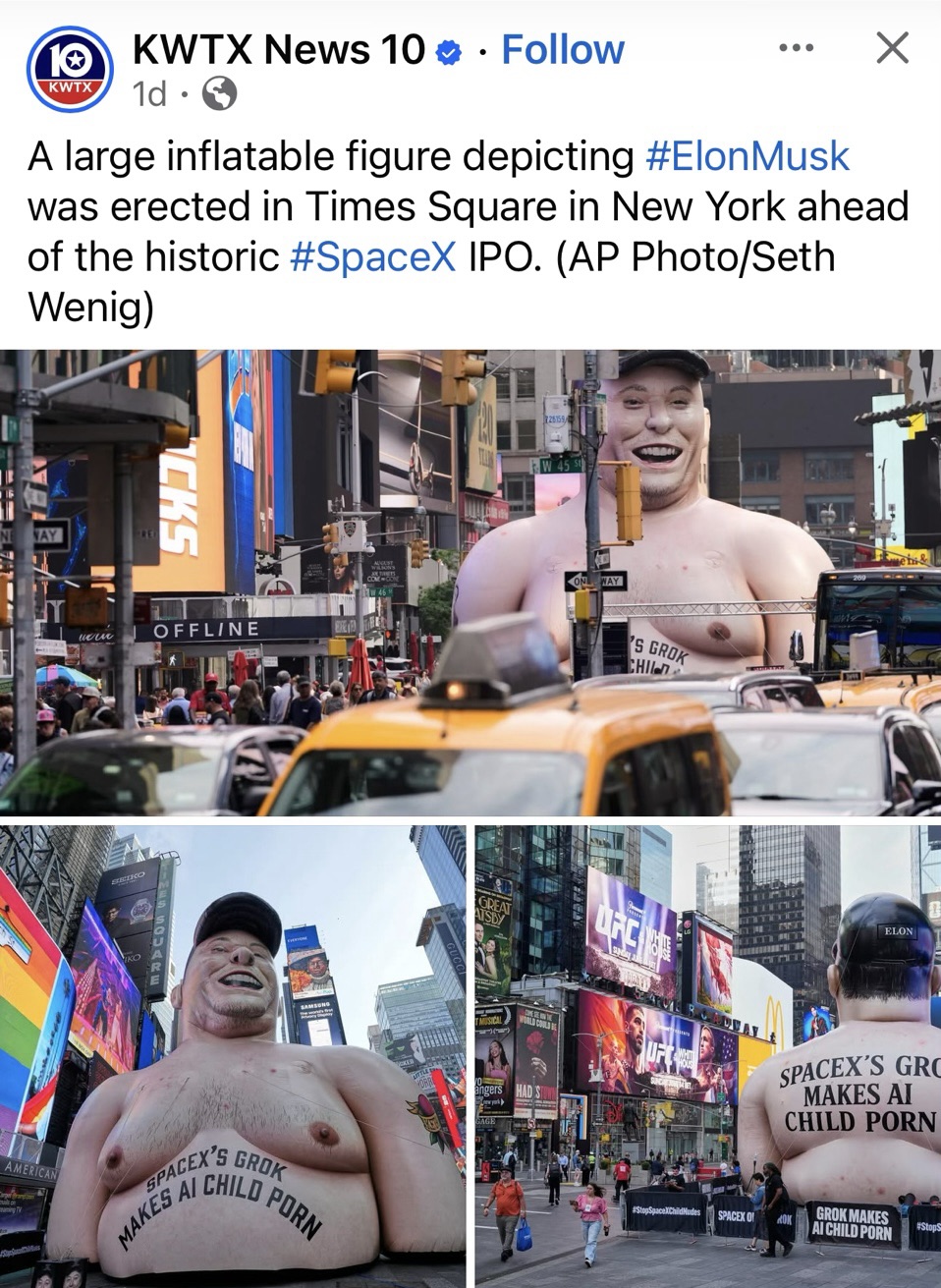
    A giant inflatable depicting Elon Musk appeared in Times Square ahead of SpaceX’s IPO. Some people laughed. Others were outraged. News outlets covered it. Social media amplified it. Millions of people who otherwise would have ignored the debate suddenly had an opinion.

    Whether you agreed with the message is almost beside the point.

    The inflatable did exactly what it was designed to do: capture attention.

    We live in an age where attention has become one of the most valuable commodities in the world. Politicians know it. Corporations know it. Activists know it. Media outlets know it.

    The modern battle is no longer simply over policy. It is over visibility.

    A century ago, governments relied on newspapers, radio broadcasts, and public rallies to shape public opinion. Today, the tools are different, but the objective remains the same. Viral clips replace newsreels. Algorithms replace newspaper editors. Giant inflatables replace political posters.

    The people protesting Elon Musk understand the same lesson that Elon Musk himself understands: if you want to influence public conversation, you must first command public attention.

    This is why modern politics increasingly resembles entertainment.

    Presidential campaigns become reality television. Billionaires become celebrities. Activists become influencers. News becomes content. Outrage becomes engagement.

    The result is a society where symbolism often travels farther than substance.

    A giant inflatable can generate more discussion than a thousand-page policy proposal. A meme can reach more people than a congressional hearing. A viral video can shape public opinion faster than a detailed investigative report.

    None of this means the underlying issues are unimportant. Questions about artificial intelligence, corporate responsibility, taxation, wealth concentration, government spending, and public accountability deserve serious discussion.

    But serious discussion rarely goes viral.

    Spectacle does.

    The inflatable in Times Square is not the story. It is a symptom.

    The real story is that we now live in a culture where every side—politicians, corporations, activists, media personalities, and ordinary citizens—is competing in the same attention economy.

    The winners are not always those with the strongest arguments.

    Often, they are simply the ones who create the most memorable image.

    Conditioning Through Headlines: How We Learn to Fear Entire Groups