One of the most fascinating aspects of modern politics is that public opinion is often shaped less by direct experience and more by communication.
As a student of Digital Media Management with a focus on Advertising and Public Relations, I find it interesting how discussions about election integrity have evolved over the last several decades. While election disputes have always existed in American politics, the way those disputes are communicated, amplified, and consumed has changed dramatically.
Before 2020, most Americans—Republican, Democrat, and Independent—generally accepted election outcomes even when they disliked the results. There were recounts, lawsuits, and accusations of misconduct from time to time, but the idea that entire national elections were routinely illegitimate was not nearly as dominant in mainstream political discourse.
What changed was not necessarily the existence of election safeguards. What changed was the level of public distrust surrounding those safeguards.
From a public relations perspective, trust is one of the most valuable assets any institution can possess. Whether the institution is a corporation, nonprofit organization, government agency, or media outlet, public confidence directly affects legitimacy. Once trust begins to erode, restoring it becomes significantly more difficult than maintaining it in the first place.
This is where the conversation becomes less about statistics and more about narrative.
Narratives are powerful because they provide people with a framework for understanding complex issues. Most citizens do not have the time or resources to personally verify every claim made about elections, government operations, public health, economics, or foreign policy. Instead, they rely on trusted sources to help interpret information.
The challenge emerges when competing narratives become more influential than shared facts.
If people are repeatedly told that elections are being stolen, manipulated, or controlled—even when evidence is insufficient to overturn results—public confidence can decline regardless of whether widespread fraud exists. Conversely, dismissing concerns without transparency can create the perception that questions are not being taken seriously, which may deepen distrust rather than alleviate it.
In communication theory, perception often influences behavior as much as reality itself.
This does not mean election fraud never occurs. Fraud exists. No serious observer argues otherwise.
However, from a systems perspective, cases involving double voting, ballot tampering, fraudulent registrations, or other election crimes can also be viewed as evidence that safeguards are functioning. Investigations, audits, voter-roll maintenance, criminal prosecutions, and oversight mechanisms exist precisely because no system is perfect.
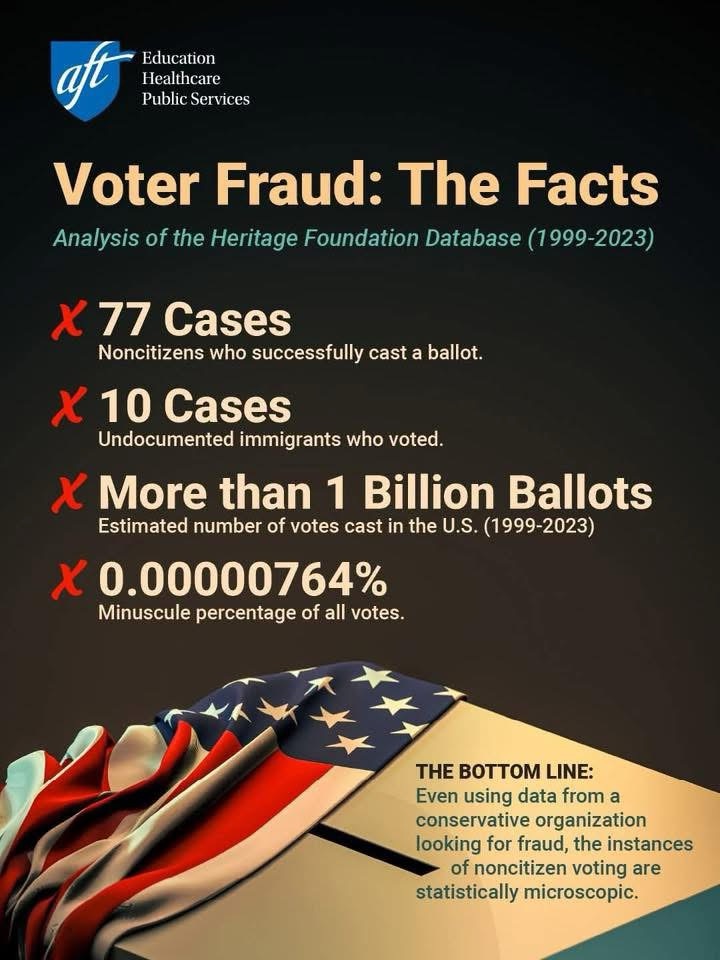
The more important question becomes one of scale and proportionality.
If documented cases are relatively rare compared to the total number of ballots cast, does that suggest a system experiencing widespread failure? Or does it indicate that existing safeguards are largely working as intended?
These are questions worth discussing thoughtfully because the answers influence public policy, voting access, election administration, and ultimately public confidence.
Digital media adds another layer to this challenge.
Algorithms reward engagement. Outrage generates clicks. Fear encourages sharing. Content that provokes strong emotional reactions often spreads faster than content that provides context or nuance. As a result, narratives that emphasize crisis, corruption, or catastrophe can gain traction regardless of whether they accurately represent the broader reality.
This dynamic is not unique to election discussions. It appears in debates about crime, immigration, healthcare, education, and countless other public issues. The underlying communication principles remain the same: repeated messaging shapes perception, perception influences belief, and belief influences behavior.
For public relations professionals, this presents both an opportunity and a responsibility.
Effective communication is not simply about persuading people. It is about building credibility through transparency, consistency, and trust. When institutions fail to communicate effectively, information vacuums emerge. Those vacuums are often filled by speculation, misinformation, or narratives designed to exploit uncertainty.
A healthy democracy depends on more than secure elections. It also depends on public confidence in those elections.
Protecting election integrity is important. Equally important is ensuring that citizens have access to accurate information and transparent processes that help them understand how those systems work.
In the digital age, trust may be one of the most valuable forms of social capital we possess. Once it is lost, rebuilding it becomes one of the greatest communication challenges any society can face.
The conversation about elections, therefore, is not only about ballots, audits, or voting procedures. It is also about narrative, perception, and the powerful role communication plays in shaping public confidence.
And from a Digital Media Management perspective, that may be the most important lesson of all.
When Reporting Isn’t Enough: Why Context Matters More Than Ever


Leave a comment