Tag: Public Relations

  • When Did Bullying Become a Political Strategy?

    When Did Bullying Become a Political Strategy?

    There was a time when most of us learned a simple lesson in elementary school:

    Don’t bully people.

    Don’t spread rumors.

    Don’t make fun of someone’s appearance.

    Don’t invent stories about people because you disagree with them.

    Yet somehow, once those same behaviors show up on social media, many adults suddenly forget everything they spent years teaching their children.

    Over the past few weeks, I’ve watched thousands of comments directed at public figures that would never be tolerated in a classroom, workplace, or neighborhood gathering. People mock appearances. They spread rumors without evidence. They repeat conspiracy theories as if repetition magically turns fiction into fact.

    The target changes depending on the day.

    Sometimes it’s a politician.

    Sometimes it’s a celebrity.

    Sometimes it’s an activist.

    Sometimes it’s an ordinary citizen who suddenly finds themselves at the center of an online pile-on.

    The behavior remains the same.

    What concerns me most is not the original comment. Every generation has had people willing to say outrageous things for attention. What concerns me is the crowd that follows.

    A rumor is posted.

    Hundreds repeat it.

    Thousands amplify it.

    Eventually, people stop asking whether it’s true and begin treating it as common knowledge simply because they’ve heard it so many times.

    Psychologists call this the “illusory truth effect.” The more often people hear a claim, the more likely they are to believe it, even when no evidence exists.

    Social media algorithms reward this behavior.

    Outrage drives engagement.

    Engagement drives visibility.

    Visibility drives advertising revenue.

    The result is a system where the most inflammatory content often receives the greatest reach.

    The consequences extend far beyond hurt feelings.

    False information damages reputations.

    Conspiracy theories erode trust.

    Constant hostility teaches younger generations that cruelty is an acceptable form of public discourse.

    Most alarming of all, it normalizes the idea that people we disagree with are somehow less deserving of dignity.

    We teach our children to verify information before repeating it.

    We teach them not to call people names.

    We teach them not to gang up on classmates.

    We teach them empathy.

    Why should those standards disappear when adults log into Facebook, X, TikTok, or any other platform?

    Disagreement is healthy.

    Debate is healthy.

    Criticism is healthy.

    Bullying is not.

    Spreading rumors is not.

    Dehumanizing people is not.

    If we expect better behavior from children, perhaps it’s time we start expecting it from ourselves.

    The internet doesn’t create character.

    It reveals it.

    And every comment we post tells the world exactly who we are.

    The Ethical Implications of Deepfake Technology: Navigating the Digital Dilemma
  • The Age of Spectacle: Why Everything Has Become a Stunt

    The Age of Spectacle: Why Everything Has Become a Stunt

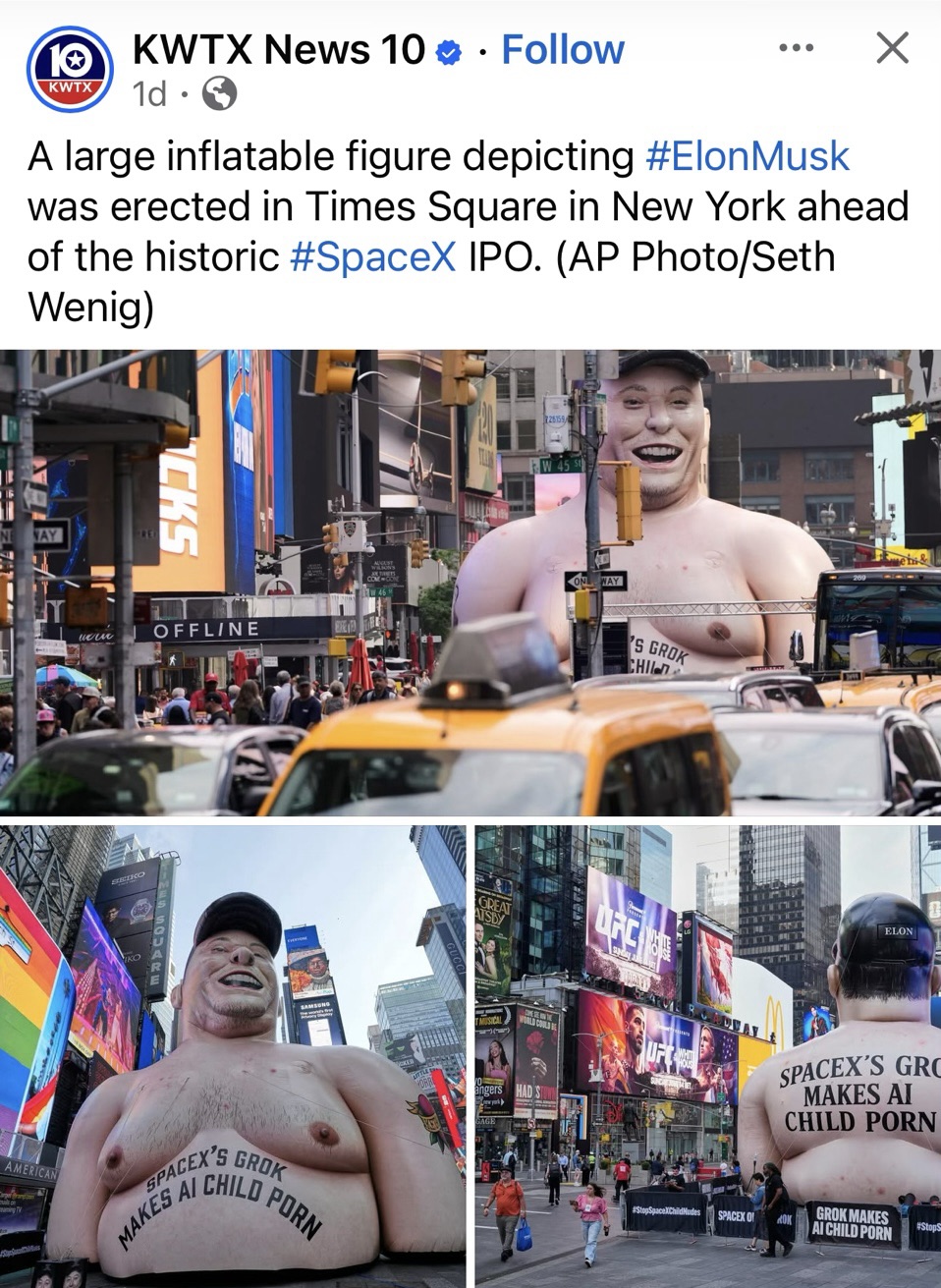
    A giant inflatable depicting Elon Musk appeared in Times Square ahead of SpaceX’s IPO. Some people laughed. Others were outraged. News outlets covered it. Social media amplified it. Millions of people who otherwise would have ignored the debate suddenly had an opinion.

    Whether you agreed with the message is almost beside the point.

    The inflatable did exactly what it was designed to do: capture attention.

    We live in an age where attention has become one of the most valuable commodities in the world. Politicians know it. Corporations know it. Activists know it. Media outlets know it.

    The modern battle is no longer simply over policy. It is over visibility.

    A century ago, governments relied on newspapers, radio broadcasts, and public rallies to shape public opinion. Today, the tools are different, but the objective remains the same. Viral clips replace newsreels. Algorithms replace newspaper editors. Giant inflatables replace political posters.

    The people protesting Elon Musk understand the same lesson that Elon Musk himself understands: if you want to influence public conversation, you must first command public attention.

    This is why modern politics increasingly resembles entertainment.

    Presidential campaigns become reality television. Billionaires become celebrities. Activists become influencers. News becomes content. Outrage becomes engagement.

    The result is a society where symbolism often travels farther than substance.

    A giant inflatable can generate more discussion than a thousand-page policy proposal. A meme can reach more people than a congressional hearing. A viral video can shape public opinion faster than a detailed investigative report.

    None of this means the underlying issues are unimportant. Questions about artificial intelligence, corporate responsibility, taxation, wealth concentration, government spending, and public accountability deserve serious discussion.

    But serious discussion rarely goes viral.

    Spectacle does.

    The inflatable in Times Square is not the story. It is a symptom.

    The real story is that we now live in a culture where every side—politicians, corporations, activists, media personalities, and ordinary citizens—is competing in the same attention economy.

    The winners are not always those with the strongest arguments.

    Often, they are simply the ones who create the most memorable image.

    Conditioning Through Headlines: How We Learn to Fear Entire Groups

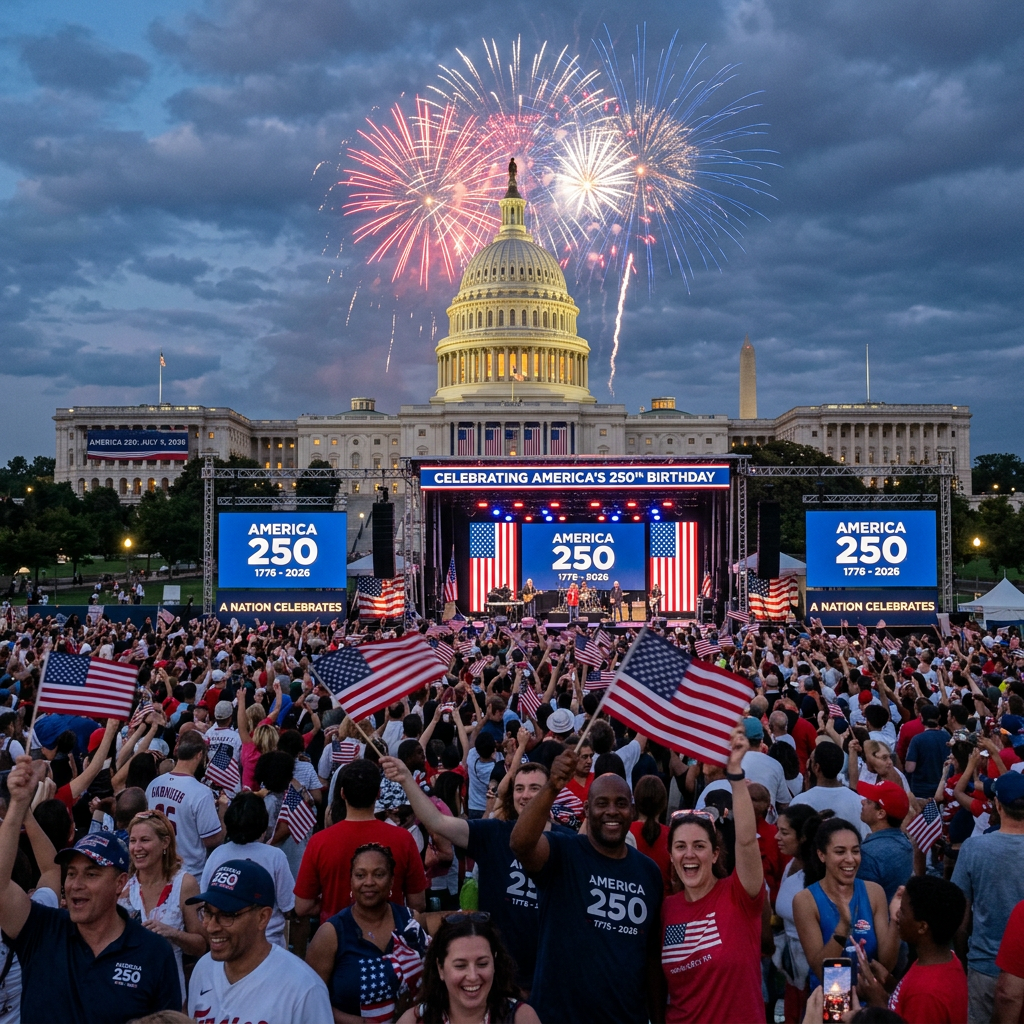
  • America250 and the Public Relations Problem Nobody Wants to Discuss

    America250 and the Public Relations Problem Nobody Wants to Discuss

    Over the past week, I’ve watched the conversation surrounding America250 spiral into something much bigger than a simple anniversary celebration.

    On paper, the concept seems straightforward. America is approaching its 250th anniversary, and organizers want a series of events to commemorate the occasion. Most Americans, regardless of political affiliation, can agree that 250 years is historically significant and worthy of reflection.

    Yet somehow the public conversation isn’t centered on American history.

    Instead, we’re talking about artist cancellations, celebrity guest lists, lawsuits, UFC fights, political branding, and social media controversies.

    That raises an important question:

    If the goal was to celebrate America, why isn’t America the story?

    The Difference Between Intent and Perception

    One of the first lessons taught in communications and public relations is that intent and perception are not the same thing.

    Organizers may genuinely intend for an event to be patriotic, unifying, and inclusive.

    But audiences respond to what they perceive.

    For many Americans, the most visible images associated with America250 have not been historical exhibits, educational programs, or discussions about the nation’s accomplishments and challenges.

    Instead, the images dominating headlines have included:

    • A UFC arena erected on White House grounds.
    • Concert performers withdrawing from scheduled events.
    • Celebrity invitation controversies.
    • Lawsuits challenging aspects of the celebration.
    • Political debates surrounding participation.

    Whether fair or unfair, those images shape public perception.

    Why Timing Matters

    Part of the controversy stems from timing.

    Most Americans associate the nation’s birthday with July 4, 1776.

    That date carries symbolic weight because it represents the adoption of the Declaration of Independence.

    However, one of the most publicized events connected to the celebration has taken place on June 14.

    June 14 is significant for several reasons:

    • Flag Day.
    • The United States Army’s birthday.
    • President Donald Trump’s birthday.

    Supporters argue those dates provide sufficient historical justification.

    Critics argue that combining a UFC event, the White House, and the president’s birthday creates a perception that the celebration is more centered on a political figure than on the nation itself.

    Again, perception becomes the story.

    When the Spectacle Becomes the Story

    Historically, major anniversaries often focus on shared national identity.

    Yet much of the media coverage surrounding America250 has focused on conflict.

    Artists who declined participation became headlines.

    States that withdrew became headlines.

    Lawsuits became headlines.

    Celebrity attendance became headlines.

    The UFC became headlines.

    At some point, the celebration itself stopped being the primary story.

    The controversy surrounding the celebration became the story.

    That is rarely what organizers hope to achieve.

    A Public Relations Case Study

    From a communications standpoint, America250 may become a fascinating case study for future students.

    Not because of the celebration itself, but because it demonstrates how quickly messaging can become disconnected from audience perception.

    Supporters often ask:

    “Why are people opposed to celebrating America?”

    Critics often ask:

    “Why does this feel more political than patriotic?”

    Those are not the same question.

    When two sides are answering different questions, meaningful discussion becomes difficult.

    The Bigger Question

    Perhaps the most interesting question is not whether someone supports or opposes a particular event.

    The more important question may be this:

    What should a 250th anniversary celebration look like?

    Should it focus on entertainment?

    History?

    Education?

    Reflection?

    National unity?

    Public debate?

    America’s story is complex. It includes remarkable achievements, painful failures, extraordinary progress, and unfinished work.

    A meaningful anniversary should have room for all of it.

    Because if the public spends more time arguing about celebrities, lawsuits, and cage fights than discussing 250 years of American history, then something important may have been lost in translation.

    And that, more than any political disagreement, may be the real communications challenge facing America250.

    Elections, Trust, and the Power of Narrative: A Digital Media Perspective