Author: RJ Hunter Holdings LLC

  • Conditioning Through Headlines: How We Learn to Fear Entire Groups

    Conditioning Through Headlines: How We Learn to Fear Entire Groups

    Most people believe propaganda is obvious.

    They imagine government posters, staged rallies, or television broadcasts telling citizens exactly what to think. They assume they would recognize it immediately.

    The reality is far more subtle.

    Today, conditioning often arrives one headline, one viral post, and one comment section at a time.

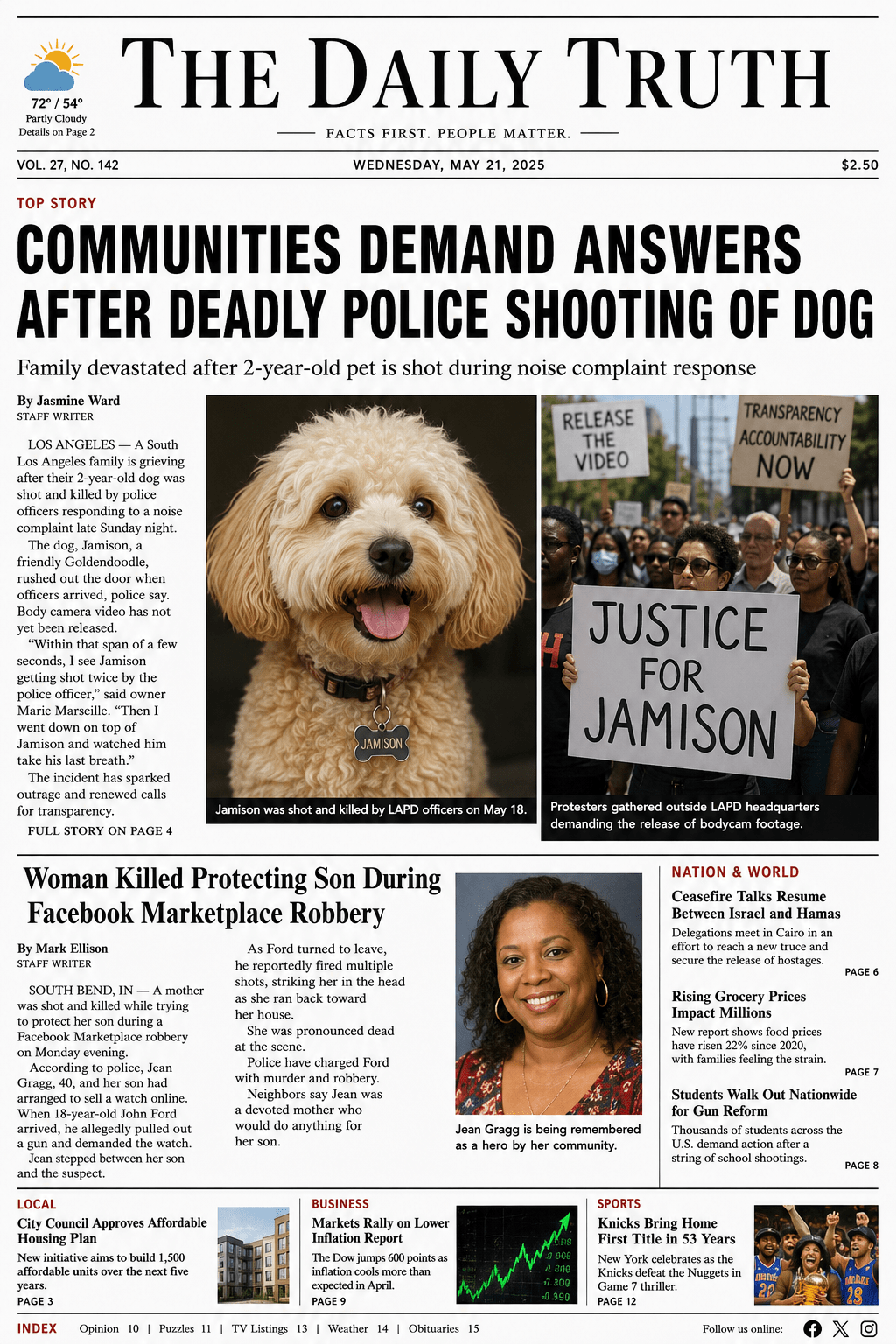
    Over the last several years, I have noticed a pattern that repeats itself across social media. A crime occurs. The victim and suspect are immediately identified by race, religion, nationality, or immigration status. The story spreads rapidly, often accompanied by emotional language designed to provoke outrage.

    “A White mother killed by a Black robber.”

    “An illegal immigrant accused of assault.”

    “A Muslim suspect.”

    “A Somali gang.”

    The details change, but the formula remains the same.

    The tragedy itself becomes secondary. The focus shifts to the identity of the people involved.

    What makes this so effective is that no one has to explicitly tell you to hate anyone.

    Nobody says, “You should fear Black people.”

    Nobody says, “You should distrust immigrants.”

    Nobody says, “You should be suspicious of Muslims.”

    Instead, you are shown the same association repeatedly until your brain begins making the connection on its own.

    Psychologists call this availability bias. We tend to judge the frequency of something based on how easily examples come to mind. If every crime story you see highlights a suspect’s race or immigration status, you begin to believe those characteristics are central to the problem—even when statistics may not support that conclusion.

    The process works because it feels like you reached the conclusion yourself.

    Meanwhile, thousands of crimes that do not fit the preferred narrative receive little attention. Murders happen every day. Assaults happen every day. Robberies happen every day. Yet only a handful become national stories.

    Why?

    Often because they can be used to reinforce an existing narrative.

    The result is that entire communities become associated with crimes committed by individuals.

    A teenager commits a robbery.

    Suddenly people are discussing an entire race.

    One immigrant commits a crime.

    Suddenly millions of immigrants are viewed with suspicion.

    One person behaves terribly.

    An entire group is expected to answer for it.

    Imagine applying that standard consistently. Every White person would be judged by the actions of the worst White criminal. Every Christian would be judged by the actions of the worst Christian. Every police officer would be judged by the worst officer. Every immigrant would be judged by the worst immigrant.

    Most of us recognize immediately how unfair that would be.

    Yet we often fail to notice when the same logic is applied to groups we already view as outsiders.

    This is why media literacy matters.

    When you see a headline, ask yourself:

    Would this still be a story if the races were reversed?

    Would this still be a story if immigration status were omitted?

    Would this still be a story if the religion were never mentioned?

    Most importantly:

    Am I being informed, or am I being conditioned?

    There is a difference between reporting facts and encouraging fear.

    Facts help us understand reality.

    Fear encourages us to see enemies everywhere.

    Every victim deserves justice. Every family deserves compassion. But when tragedies are selectively amplified to create suspicion toward entire groups of people, the conversation is no longer about the victim.

    It becomes about manufacturing division.

    History shows us where that road leads.

    The most dangerous propaganda is rarely the kind that demands hatred outright.

    It is the kind that quietly teaches it, one story at a time, until people no longer recognize they are being taught.

    When Reporting Isn’t Enough: Why Context Matters More Than Ever

  • The Age of Spectacle: Why Everything Has Become a Stunt

    The Age of Spectacle: Why Everything Has Become a Stunt

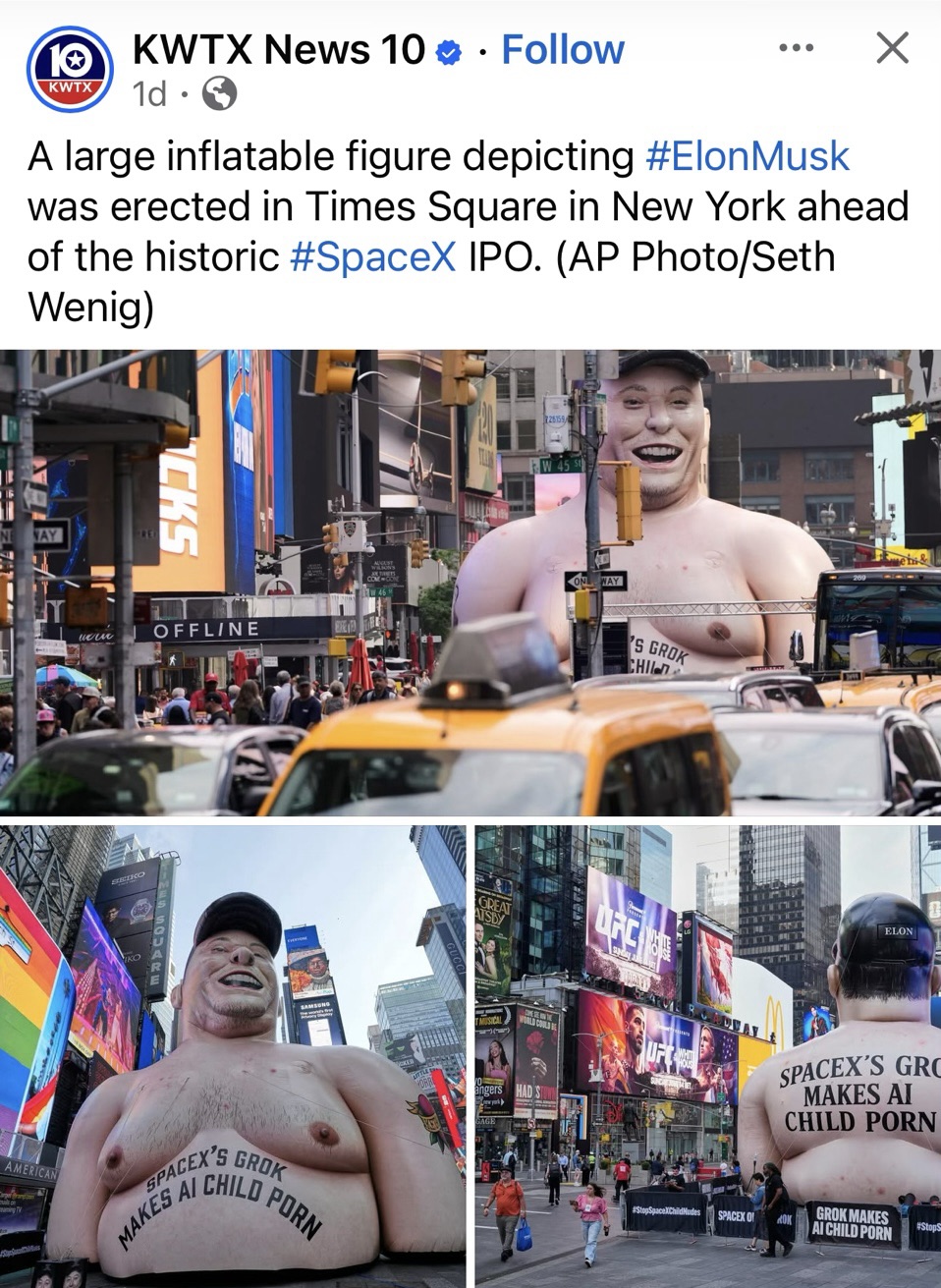
    A giant inflatable depicting Elon Musk appeared in Times Square ahead of SpaceX’s IPO. Some people laughed. Others were outraged. News outlets covered it. Social media amplified it. Millions of people who otherwise would have ignored the debate suddenly had an opinion.

    Whether you agreed with the message is almost beside the point.

    The inflatable did exactly what it was designed to do: capture attention.

    We live in an age where attention has become one of the most valuable commodities in the world. Politicians know it. Corporations know it. Activists know it. Media outlets know it.

    The modern battle is no longer simply over policy. It is over visibility.

    A century ago, governments relied on newspapers, radio broadcasts, and public rallies to shape public opinion. Today, the tools are different, but the objective remains the same. Viral clips replace newsreels. Algorithms replace newspaper editors. Giant inflatables replace political posters.

    The people protesting Elon Musk understand the same lesson that Elon Musk himself understands: if you want to influence public conversation, you must first command public attention.

    This is why modern politics increasingly resembles entertainment.

    Presidential campaigns become reality television. Billionaires become celebrities. Activists become influencers. News becomes content. Outrage becomes engagement.

    The result is a society where symbolism often travels farther than substance.

    A giant inflatable can generate more discussion than a thousand-page policy proposal. A meme can reach more people than a congressional hearing. A viral video can shape public opinion faster than a detailed investigative report.

    None of this means the underlying issues are unimportant. Questions about artificial intelligence, corporate responsibility, taxation, wealth concentration, government spending, and public accountability deserve serious discussion.

    But serious discussion rarely goes viral.

    Spectacle does.

    The inflatable in Times Square is not the story. It is a symptom.

    The real story is that we now live in a culture where every side—politicians, corporations, activists, media personalities, and ordinary citizens—is competing in the same attention economy.

    The winners are not always those with the strongest arguments.

    Often, they are simply the ones who create the most memorable image.

    Conditioning Through Headlines: How We Learn to Fear Entire Groups

  • Elections, Trust, and the Power of Narrative: A Digital Media Perspective

    Elections, Trust, and the Power of Narrative: A Digital Media Perspective

    One of the most fascinating aspects of modern politics is that public opinion is often shaped less by direct experience and more by communication.

    As a student of Digital Media Management with a focus on Advertising and Public Relations, I find it interesting how discussions about election integrity have evolved over the last several decades. While election disputes have always existed in American politics, the way those disputes are communicated, amplified, and consumed has changed dramatically.

    Before 2020, most Americans—Republican, Democrat, and Independent—generally accepted election outcomes even when they disliked the results. There were recounts, lawsuits, and accusations of misconduct from time to time, but the idea that entire national elections were routinely illegitimate was not nearly as dominant in mainstream political discourse.

    What changed was not necessarily the existence of election safeguards. What changed was the level of public distrust surrounding those safeguards.

    From a public relations perspective, trust is one of the most valuable assets any institution can possess. Whether the institution is a corporation, nonprofit organization, government agency, or media outlet, public confidence directly affects legitimacy. Once trust begins to erode, restoring it becomes significantly more difficult than maintaining it in the first place.

    This is where the conversation becomes less about statistics and more about narrative.

    Narratives are powerful because they provide people with a framework for understanding complex issues. Most citizens do not have the time or resources to personally verify every claim made about elections, government operations, public health, economics, or foreign policy. Instead, they rely on trusted sources to help interpret information.

    The challenge emerges when competing narratives become more influential than shared facts.

    If people are repeatedly told that elections are being stolen, manipulated, or controlled—even when evidence is insufficient to overturn results—public confidence can decline regardless of whether widespread fraud exists. Conversely, dismissing concerns without transparency can create the perception that questions are not being taken seriously, which may deepen distrust rather than alleviate it.

    In communication theory, perception often influences behavior as much as reality itself.

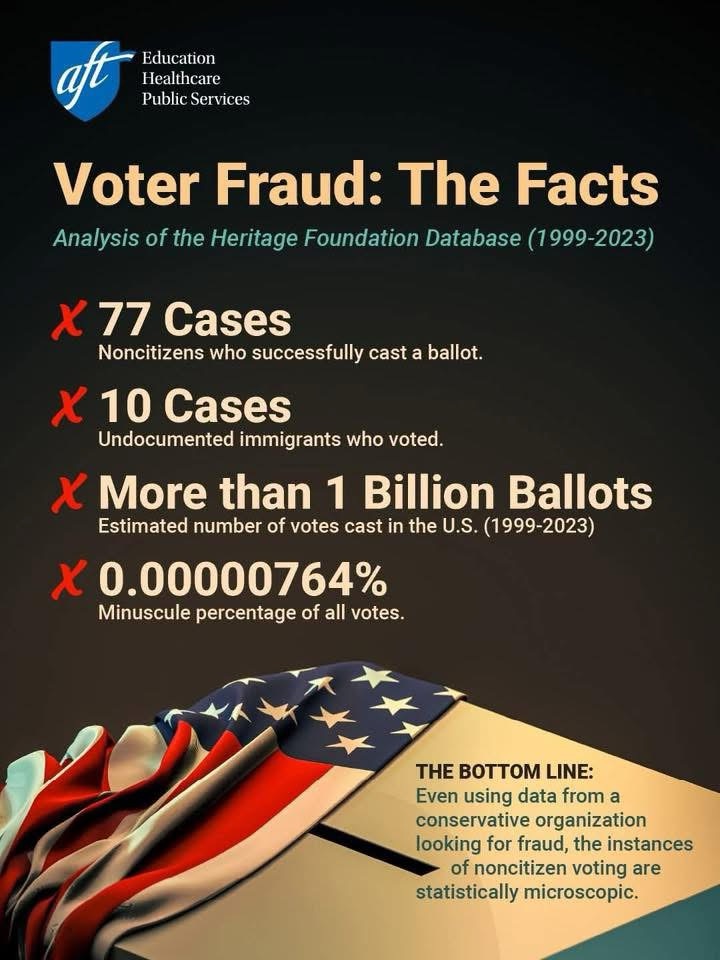
    This does not mean election fraud never occurs. Fraud exists. No serious observer argues otherwise.

    However, from a systems perspective, cases involving double voting, ballot tampering, fraudulent registrations, or other election crimes can also be viewed as evidence that safeguards are functioning. Investigations, audits, voter-roll maintenance, criminal prosecutions, and oversight mechanisms exist precisely because no system is perfect.

    The more important question becomes one of scale and proportionality.

    If documented cases are relatively rare compared to the total number of ballots cast, does that suggest a system experiencing widespread failure? Or does it indicate that existing safeguards are largely working as intended?

    These are questions worth discussing thoughtfully because the answers influence public policy, voting access, election administration, and ultimately public confidence.

    Digital media adds another layer to this challenge.

    Algorithms reward engagement. Outrage generates clicks. Fear encourages sharing. Content that provokes strong emotional reactions often spreads faster than content that provides context or nuance. As a result, narratives that emphasize crisis, corruption, or catastrophe can gain traction regardless of whether they accurately represent the broader reality.

    This dynamic is not unique to election discussions. It appears in debates about crime, immigration, healthcare, education, and countless other public issues. The underlying communication principles remain the same: repeated messaging shapes perception, perception influences belief, and belief influences behavior.

    For public relations professionals, this presents both an opportunity and a responsibility.

    Effective communication is not simply about persuading people. It is about building credibility through transparency, consistency, and trust. When institutions fail to communicate effectively, information vacuums emerge. Those vacuums are often filled by speculation, misinformation, or narratives designed to exploit uncertainty.

    A healthy democracy depends on more than secure elections. It also depends on public confidence in those elections.

    Protecting election integrity is important. Equally important is ensuring that citizens have access to accurate information and transparent processes that help them understand how those systems work.

    In the digital age, trust may be one of the most valuable forms of social capital we possess. Once it is lost, rebuilding it becomes one of the greatest communication challenges any society can face.

    The conversation about elections, therefore, is not only about ballots, audits, or voting procedures. It is also about narrative, perception, and the powerful role communication plays in shaping public confidence.

    And from a Digital Media Management perspective, that may be the most important lesson of all.

    When Reporting Isn’t Enough: Why Context Matters More Than Ever

  • America250 and the Public Relations Problem Nobody Wants to Discuss

    America250 and the Public Relations Problem Nobody Wants to Discuss

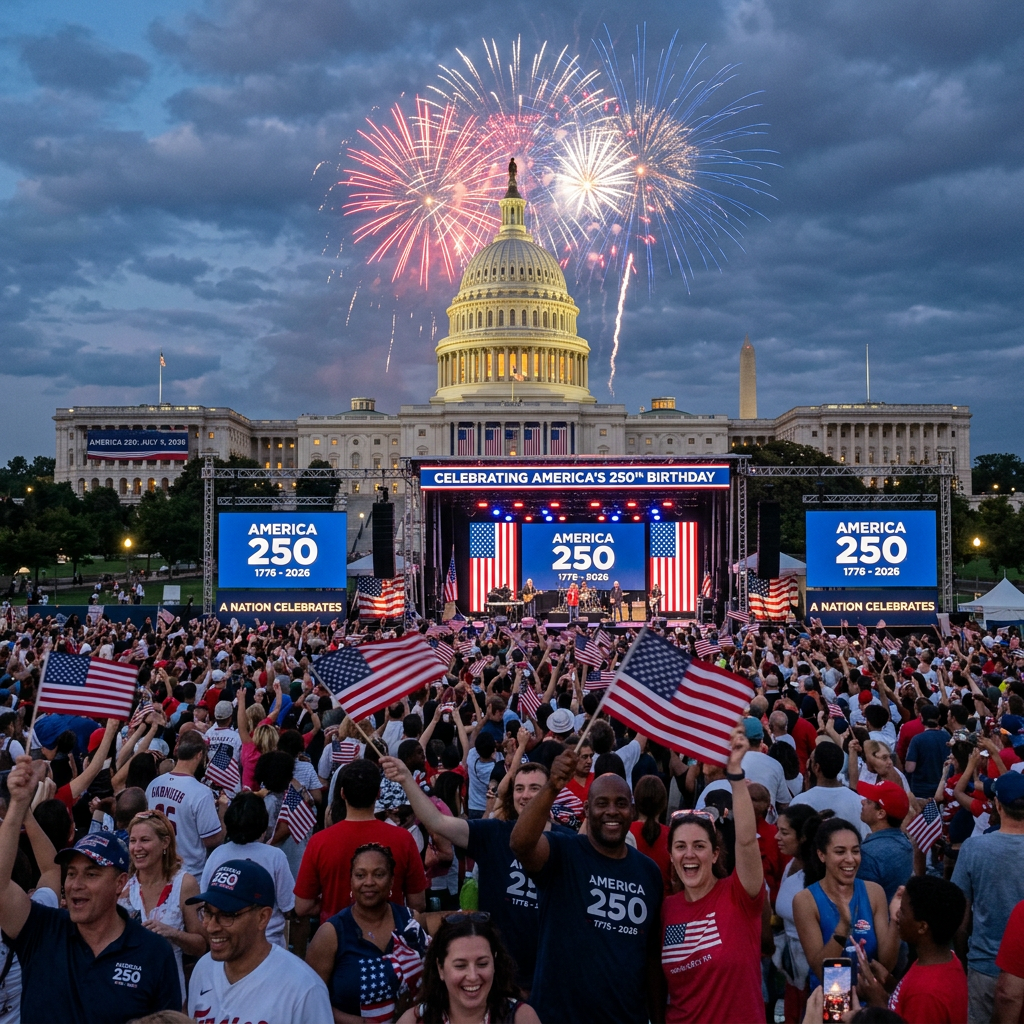
    Over the past week, I’ve watched the conversation surrounding America250 spiral into something much bigger than a simple anniversary celebration.

    On paper, the concept seems straightforward. America is approaching its 250th anniversary, and organizers want a series of events to commemorate the occasion. Most Americans, regardless of political affiliation, can agree that 250 years is historically significant and worthy of reflection.

    Yet somehow the public conversation isn’t centered on American history.

    Instead, we’re talking about artist cancellations, celebrity guest lists, lawsuits, UFC fights, political branding, and social media controversies.

    That raises an important question:

    If the goal was to celebrate America, why isn’t America the story?

    The Difference Between Intent and Perception

    One of the first lessons taught in communications and public relations is that intent and perception are not the same thing.

    Organizers may genuinely intend for an event to be patriotic, unifying, and inclusive.

    But audiences respond to what they perceive.

    For many Americans, the most visible images associated with America250 have not been historical exhibits, educational programs, or discussions about the nation’s accomplishments and challenges.

    Instead, the images dominating headlines have included:

    • A UFC arena erected on White House grounds.
    • Concert performers withdrawing from scheduled events.
    • Celebrity invitation controversies.
    • Lawsuits challenging aspects of the celebration.
    • Political debates surrounding participation.

    Whether fair or unfair, those images shape public perception.

    Why Timing Matters

    Part of the controversy stems from timing.

    Most Americans associate the nation’s birthday with July 4, 1776.

    That date carries symbolic weight because it represents the adoption of the Declaration of Independence.

    However, one of the most publicized events connected to the celebration has taken place on June 14.

    June 14 is significant for several reasons:

    • Flag Day.
    • The United States Army’s birthday.
    • President Donald Trump’s birthday.

    Supporters argue those dates provide sufficient historical justification.

    Critics argue that combining a UFC event, the White House, and the president’s birthday creates a perception that the celebration is more centered on a political figure than on the nation itself.

    Again, perception becomes the story.

    When the Spectacle Becomes the Story

    Historically, major anniversaries often focus on shared national identity.

    Yet much of the media coverage surrounding America250 has focused on conflict.

    Artists who declined participation became headlines.

    States that withdrew became headlines.

    Lawsuits became headlines.

    Celebrity attendance became headlines.

    The UFC became headlines.

    At some point, the celebration itself stopped being the primary story.

    The controversy surrounding the celebration became the story.

    That is rarely what organizers hope to achieve.

    A Public Relations Case Study

    From a communications standpoint, America250 may become a fascinating case study for future students.

    Not because of the celebration itself, but because it demonstrates how quickly messaging can become disconnected from audience perception.

    Supporters often ask:

    “Why are people opposed to celebrating America?”

    Critics often ask:

    “Why does this feel more political than patriotic?”

    Those are not the same question.

    When two sides are answering different questions, meaningful discussion becomes difficult.

    The Bigger Question

    Perhaps the most interesting question is not whether someone supports or opposes a particular event.

    The more important question may be this:

    What should a 250th anniversary celebration look like?

    Should it focus on entertainment?

    History?

    Education?

    Reflection?

    National unity?

    Public debate?

    America’s story is complex. It includes remarkable achievements, painful failures, extraordinary progress, and unfinished work.

    A meaningful anniversary should have room for all of it.

    Because if the public spends more time arguing about celebrities, lawsuits, and cage fights than discussing 250 years of American history, then something important may have been lost in translation.

    And that, more than any political disagreement, may be the real communications challenge facing America250.

    Elections, Trust, and the Power of Narrative: A Digital Media Perspective